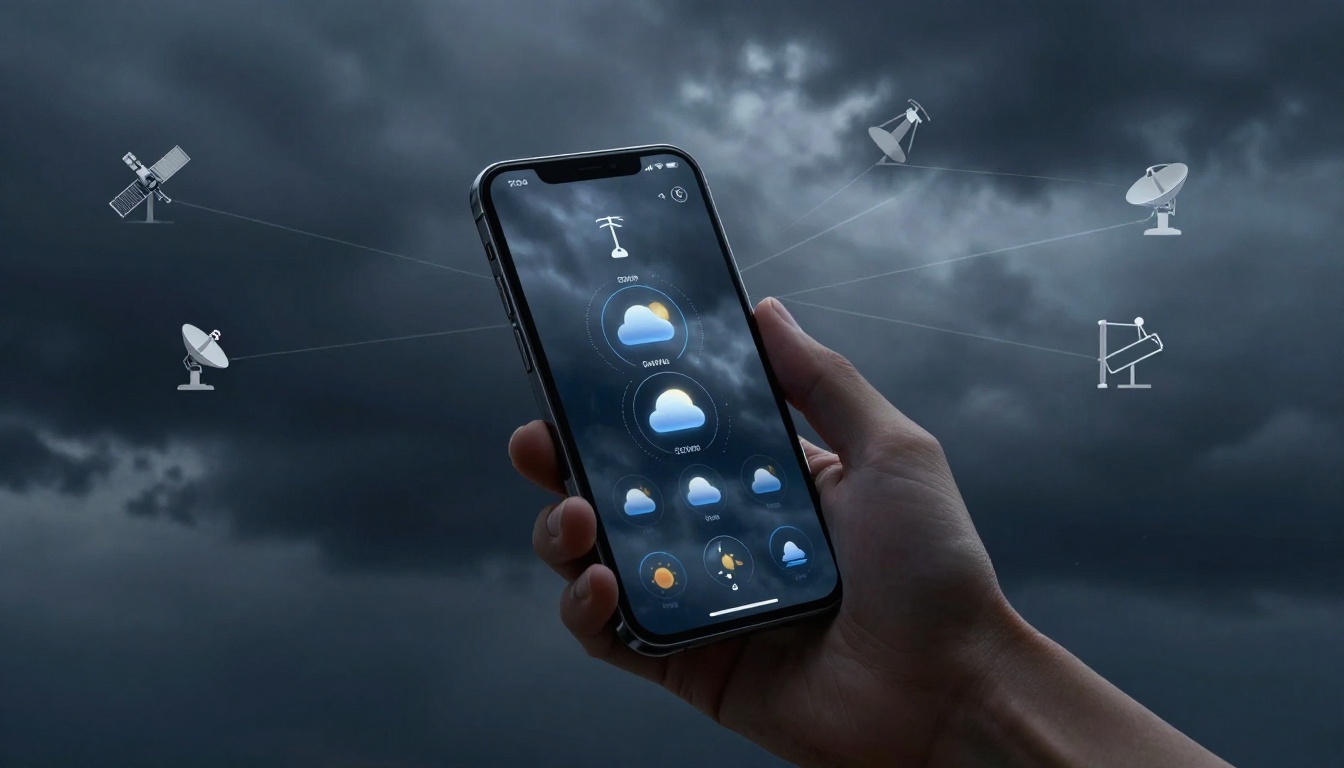
You grab your phone before heading out. Rain or shine? That weather app knows. But where does it pull that info from?
Weather apps don’t guess. They tap into APIs from global networks. These pull live data from satellites, stations, and radars. You’ll see how this works, top APIs for 2026, simple steps to add one to your app, and trends shaping the future. Benefits await, like building your own tool or grasping daily tech.
First, let’s break down the fetch process.
How Weather Apps Fetch Live Data Through APIs
Apps send quick web requests. Think of it as texting a friend for the forecast. You include your spot, like city name or latitude and longitude.
The API replies fast with JSON data. This packs temperature, rain odds, wind speed, and forecasts. Sources feed it all: ground stations measure air, satellites snap clouds, radars track storms, models predict ahead.
Free tiers exist, but paid ones unlock more. Limits hit, say 1,000 calls daily. Apps stay under to avoid blocks.
Why APIs over scraping sites? Sites change layouts; APIs stay steady and legal. Plus, data stays fresh.
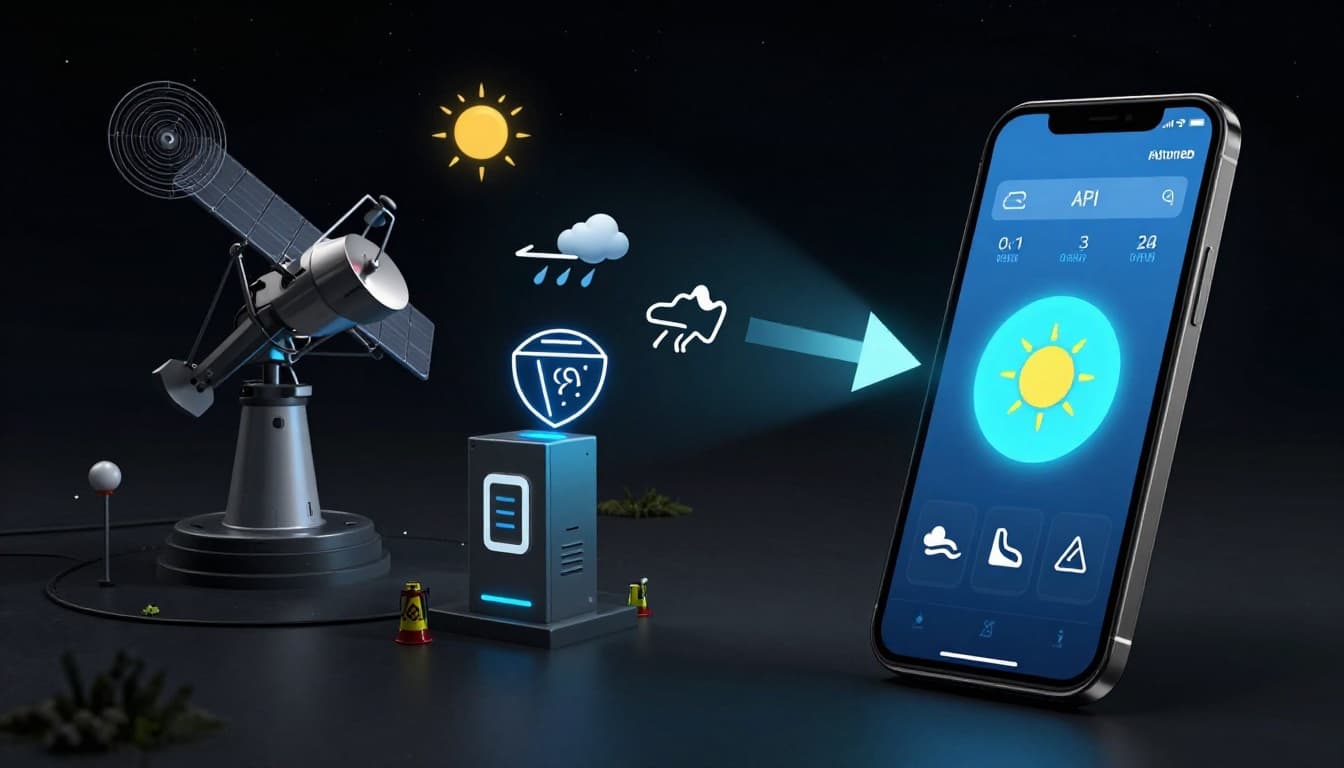
Data flows like this: app requests, server grabs from sources, sends back structured info. Simple, right?
Top Weather APIs Dominating in 2026
Developers flock to reliable picks in 2026. Xweather leads for production apps. OpenWeatherMap suits beginners. Others shine too.
Here’s a quick comparison of top ones. It covers features, free limits, and best fits.
| API | Top Features | Free Tier | Best For |
|---|---|---|---|
| Xweather | Lightning, hail forecasts, AI summaries, historical to 2004 | Enterprise focus | Severe weather apps |
| OpenWeatherMap | Hyperlocal minute data, One Call 3.0 for current/forecast/history | 1,000 calls/day | Global beginner projects |
| WeatherAPI.com | Current/forecast/history, clean JSON | Generous, historical included | Startups and prototypes |
| AccuWeather | MinuteCast, severe alerts, AQI/UV | Limited, 50/day | Alert-heavy business apps |
| Tomorrow.io | 80+ layers, AI radar, hyperlocal alerts | Limited free | Aviation and logistics |
Xweather tops charts for accuracy. Check their top weather APIs guide for 2026 for deep dives.
Also, NWS offers free US basics via their API docs.
OpenWeatherMap: Perfect for Beginners Worldwide
OpenWeatherMap rules for new coders. Grab current weather, 10-day forecasts, history, even air quality.
Free tier gives 1,000 calls daily. JSON outputs stay simple. A travel app might pull forecasts by city, show icons for rain or sun. Huge community helps too; see their API guide.
Tomorrow.io and Xweather: Leaders in Hyperlocal Precision
Tomorrow.io packs AI radar for real-time spots. Long forecasts and alerts grow fast. Explore Tomorrow.io docs.
Xweather matches with lightning detection and hail probs. Both beat others on neighborhood-level detail. Great for apps needing now-data.
WeatherAPI and AccuWeather: High-Volume and Alerts
WeatherAPI.com offers 1M free calls monthly. Astronomy data adds fun. Check WeatherAPI docs.
AccuWeather focuses severe alerts. Minute-by-minute rain fits safety apps. Their developer overview details it.
Step-by-Step Guide to Adding Weather APIs to Your App
Ready to code? Start with OpenWeatherMap. It’s free and easy.
Sign up first. Grab your API key from their dashboard.
Next, build a request. Use JavaScript fetch or Python requests.
Your First API Call: From Key to Forecast Data
Here’s a JS example for London forecast. Replace YOUR_KEY.
fetch('https://api.openweathermap.org/data/2.5/forecast?q=London&units=metric&appid=YOUR_KEY')
  .then(response => response.json())
  .then(data => console.log(data));
Params matter: units=metric for Celsius. Filter 3-hour slots to daily maxes.
Response sample: {"list": [{"main": {"temp": 15}, "weather": [{"description": "rain"}]}]}. Pull temp, icons.
Test it. Data arrives in seconds.
Smart Handling: Caching, Errors, and UI Polish
Cache results 10 minutes. Saves calls, speeds apps.
Check errors: Bad city? Show “Try again.” Use try-catch.
Display smart: Icons for clouds, charts for trends. Server-side keys stay safe.
Scale later to paid. Test free first.
Fresh Trends Making Weather APIs Smarter in 2026
AI drives now. Forecasts hit 4km precision, hyperlocal by block.
One call grabs current, forecast, history. Farms use it for crops; energy firms track wind.
Free tiers expand, like NWS grids for US storms. Speed hits real-time for apps.
Historical data deepens for climate tools. Reliability soars amid wild weather.
Future apps track personal risks. Exciting times ahead.
Weather APIs power your daily checks. Top ones like OpenWeatherMap and Xweather deliver accuracy. Integration takes minutes; trends like AI hyperlocal boost it all.
Try OpenWeatherMap free today. Build a quick app. Which API will you test? Share below. Subscribe for more tech how-tos. Dive in now.